

eBooks allow marketers to target buyers in the middle of the funnel. They also show a more research-intensive, visually dynamic side of the brand. By incorporating an eye-catching ebook cover and a carefully selected color palette, you can unify your content for an easy read that truly resonates with your audience. At Brafton, we create and design several eBooks ourselves every month, but we’re always on the lookout for inspiration. We’ve compiled 5 of our favorite B2B eBook examples to illustrate why they’re great and how you may be able to learn from them. From choosing the right cover design to leveraging Adobe InDesign for pixel-perfect layouts, each piece demonstrates how thoughtful formatting can turn a simple PDF into a popular ebook that drives real marketing lead generation.
While looking through these example ebooks, keep in mind how a standout book cover — or even a customized Wattpad book cover — can be adapted for B2B uses, showing that creative design choices can transcend categories and thrive on social media feeds.
Why Should You Create eBooks?
There are so many different kinds of online content that your team could devote its time to, but eBooks should definitely be at the top of your list. Not only are they a unique form of content marketing, but they can also help you generate leads. They can also increase customer engagement and boost brand awareness. eBooks are an excellent way to showcase your team’s thought leadership through long-form content.
Here are some key reasons to create eBooks:
- Generate high-quality leads by offering valuable content in exchange for contact information, fuelling your marketing lead generation efforts.
- Establish your brand’s authority and thought leadership within your industry, echoing best practices championed by the Content Marketing Institute.
- Reinforce your visual brand identity with cohesive visual design, compelling cover layout and consistent formatting.
- Increase customer engagement through interactive and visually appealing content that is easy to share across social media.
- Offer in-depth information that educates your audience, builds trust and supports a holistic marketing strategy.
- Support omnichannel campaigns by repurposing sections of your eBook into blog posts, webinars, podcasts or bite-sized social clips.
- Reach readers in their preferred environment by publishing in popular eBook format options, from interactive PDFs to Kindle Direct Publishing files.
Publishing an eBook focusing on specific topics is worth it when done correctly. Building a repertoire of high-quality content, including eBooks, will help businesses in a multitude of ways, some of which include showing a brand’s authority on a subject, generating leads and reinforcing visual brand identity.
Subscribe to
The Content Marketer
Get weekly insights, advice and opinions about all things digital marketing.
Key Features of High-Quality E-books
It’s important to know what makes an eBook stand out. High-quality eBooks typically share these key features:
- Professional design: Consistent branding, high-resolution images and a visually appealing layout capture and retain reader attention.
- Clear structure: A logical flow with a table of contents, chapters and descriptive headings makes content easy to navigate.
- Valuable content: The information provided should be relevant, actionable and tailored to the target audience.
- Interactive elements: Clickable links, embedded media and interactive graphics transform a static PDF into a true eBook adventure that boosts the reading experience.
- Mobile optimization: eBooks should be user-friendly and readable on all devices, including smartphones and tablets.
- Strong calls to action: Effective eBooks guide readers toward the next step, such as downloading another asset or contacting your team.
- Consistent formatting: Readable font sizes, ample white space and a balanced mix of text and visuals create a polished look.
- Industry-standard tools: Using platforms such as Adobe InDesign ensures pixel-perfect alignment and smooth export to popular eBook formats.
- Flexible templates: A well-crafted, customized eBook template lets you update content quickly without sacrificing design integrity.
eBook Writing Best Practices
Creating an interactive eBook from scratch is not as simple as you might think. Not only do you need a professional writer to expertly tackle the copy, but you need a star design team to format the eBook in a way that is easily consumable by all readers. When compared with a white paper, a similar marketing asset, eBooks adopt a more aesthetic, design-centric approach to facilitate easy, digestible reading.
In addition, you’ll need an engaging landing page that gives readers a reason to enter their contact information to download the asset. This eBook landing page should not only feature relevant design elements — including an eye-catching cover design — but also reflect the tone of your eBook.
The landing page ought to be intuitive to both desktop and mobile users, particularly given the prevalence of mobile-focused content and the rise of Kindle Direct Publishing. All these tasks may take quite some time for your team to develop, but you could always partner with eBook design services to help guide you through the creation process — or simply go hands-off and trust the agency with its formulation.
In doing so, you’ll ensure that your eBook not only looks excellent but also effectively serves its purpose of building brand awareness, generating high-quality leads and, ultimately, driving audience members down your funnel. By using a variety of eBook templates — from an aesthetic frame to a more understated approach — you can ensure that your final format aligns with your overall message.
The 5 Best eBook Examples
1. Brafton: Building a Sustainable Future in Healthcare

This eBook is a great example of combining professional copywriting with expert formatting and design. Written and designed entirely by the Brafton team in Adobe InDesign, it demonstrates how a cohesive eBook template, high-quality images and clear structure can elevate content marketing efforts.
The piece is both a marketing asset and a healthcare resource, showcasing how a popular eBook can act as a cornerstone asset for lead generation campaigns. The polished layout, eye-catching infographics and strategic calls to action guide readers through learning, strategies, benefits trends and more, highlighting the client’s expertise while providing value for readers.
2. Search Engine Journal: Illustrated Guide To Link Building
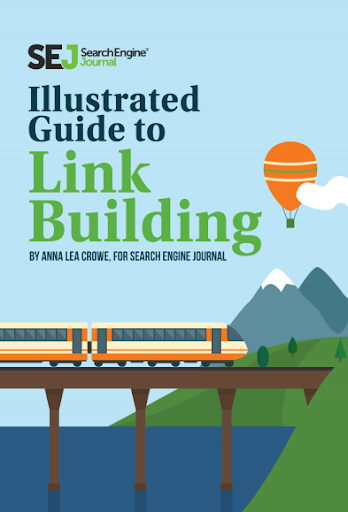
In this example, the team at Search Engine Journal (SEJ) dove headfirst into the concept of link building, analyzing it from every angle and providing readers with simple takeaways. The guide uses a semi-comic book visual style, proving that technical topics can still feel approachable and engaging.
The size alone — 69 pages — speaks to how comprehensive this guide is, and we’re particularly fond of the super logical layout and sparse eBook design. Sure, eBooks tend to be a bit heavier on graphics than a white paper or blog post, but for a topic as wide open as “link building,” you’re going to need a lot of text on each page to thoroughly explain every detail.
At the end of each chapter, SEJ provides a practical breakdown of both the benefits and recommended tools of a given link-building tactic:
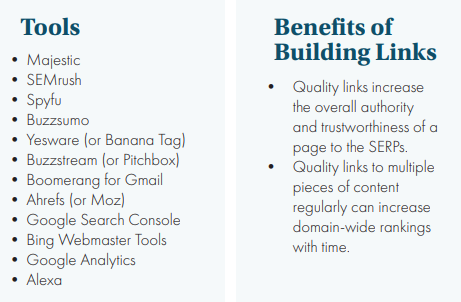
In addition to providing real-world examples of successful link-building tactics and their performance metrics, the eBook concludes by giving readers a 12-month link-building checklist. This is an excellent example of how you can generate leads by offering a concrete path forward in your eBook guide.
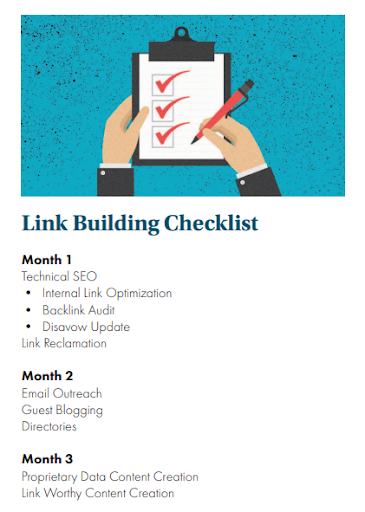
It’s safe to say SEJ did their due diligence with this project, and site visitors who provided their contact info probably received more value than they bargained for.
3. Optimizely: Master Your Next Website Redesign
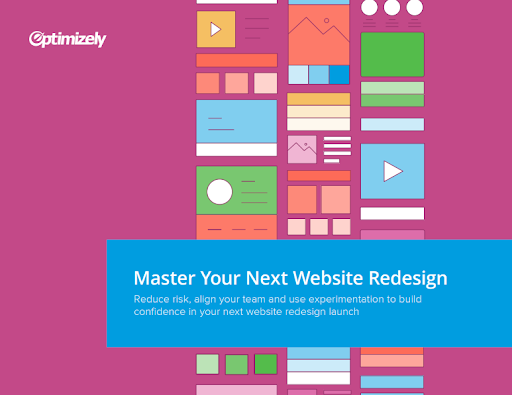
Right from the get-go, Optimizely draws in readers through sheer visual allure. With for a design that features geometric shapes and near-pastel colors, Optimizely walks through the ins and outs of website redesigns.
Considering how many technical SEO and web dev components go into a redesign, they’re often quite expensive and left to the expertise of agencies. And that’s why this eBook’s title matters, specifically the word “master.”
If you get a website redesign wrong, you’re potentially looking at thousands of dollars down the drain. For e-commerce sites, we’re talking 1,000,000s lost due to poor UX, shopping cart abandonment and fleeing customers.
This step-by-step guide highlights the interplay of setting goals, collecting analytics data, developing a visual identity, creating content and QA testing wireframes. It also integrates use cases into its narrative to drive home the point of adhering to the provided guidance. The user-friendly eBook structure, combined with downloadable checklists, encourages readers to implement each tip immediately.
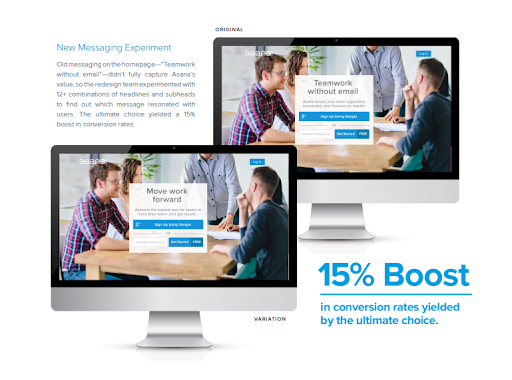
This eBook example goes beyond best practices and demonstrates tangible methods for conquering the mountain that is a website redesign. Readers can feel that they get a professional resource in a popular eBook format that’s easy to share, print or annotate.
4. Pardot: The B2B Marketer’s Lead Generation Field Guide
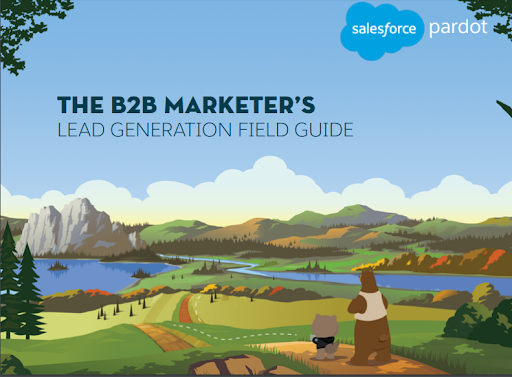
Pardot is a marketing automation powerhouse. Although its parent company, Salesforce, may be the keeper of all things customer analytics, data management and sales integration, neither brand lets these jargon terms obscure its playful, imaginative branding.
With unique character illustrations, expert color palettes and a touch of graphical worldbuilding, Pardot is more than just another B2B software company; it also strives to satisfy both creative and analytical minds through visually satisfying brand experiences.
In this “Field Guide” for generating B2B leads, Pardot begins by introducing a gang of characters and explores its outdoorsy theme throughout the entirety of the eBook, turning the reader journey into a lighthearted adventure.

While lighter on data points relative to other eBooks we’ve shared so far, Pardot takes a more narrative approach, as the topic itself is less about numbers and more so an exploration of a high-level concept. As such, more text per page makes sense.
Pardot also requires a fairly extensive exchange of information: Site visitors must fill out a half dozen fields to gain access to the eBook, which better qualifies their leads but also asks a lot of readers.
Top tip: If you’re creating eBook content in a specialized niche, you can also consider integrating relevant examples or anecdotal evidence to maintain your readers’ interest.
5. Vend: The 10 Biggest Mistakes Retailers Make When Running Multiple Stores
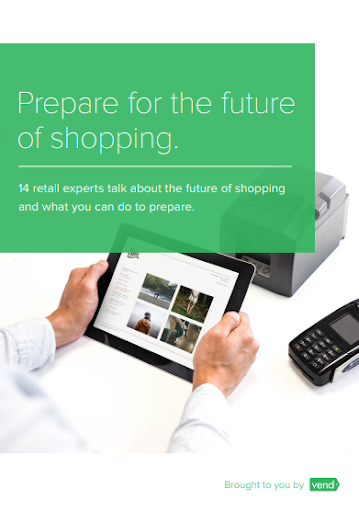
Vend, a cloud POS software provider, employs design elements modestly in its retail guide, opting for more of a white paper-style asset. We’ll still consider this an eBook because it serves the same purpose as others: being a lead magnet. Even a more straightforward design can rely on a simple but professional eBook cover and effectively communicate value to readers.
What Vend tones down in illustrations, it makes up for in personalized quotations, human imagery and logical flow of chapters, with each section highlighting a new retail prediction.
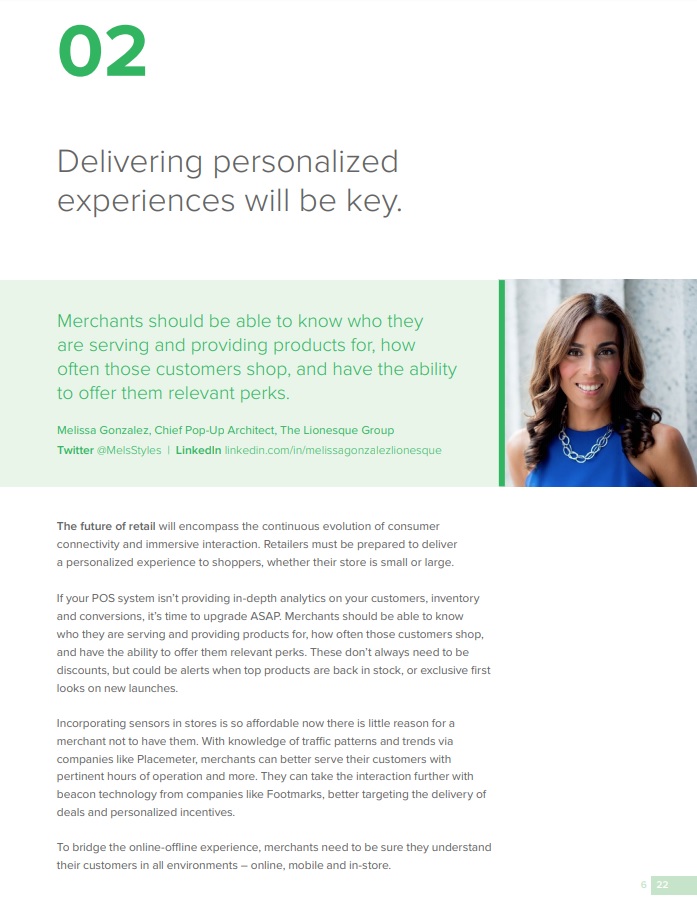
What makes this eBook work is its consistent use of green paired with white space — not too busy, but not lacking in effectiveness.
As marketing assets go, an eBook is a time-intensive project requiring the efforts of multiple creative departments. But more time doesn’t always equate to better results.
As Vend shows, once you gather industry perspectives that speak to the overall arc of the asset (in this case, retail predictions from top players in the space), much of the work is done. From there, adding in simple design cues may be all that’s necessary to convey information in the best way possible.
While other companies may have gone heavier on custom imagery, Vend allows industry influencers to speak for themselves, carrying the load of the eBook. And it probably allowed them to go live quicker — an important consideration when you create assets initiatives on tight deadlines.
Partner With the Experts
These real-world examples of eBooks should hopefully help you envision your next eBook creation, either in design quality or breadth of topic coverage. Remember, the right strategy can lay the foundation for a professional eBook that resonates.
While you can experiment with various layouts that reflect your brand image, the best practice is to include a table of contents, appropriate citations and dynamic front and back covers. Not only do these features allow readers to jump straight to the chapters that align with their quest for information, but they also package together start and endpoints.
By incorporating a cohesive eBook template from the outset, you can streamline the process and ensure that your final product is consistent in style and message. A customized approach lets you refresh older assets quickly and keep pace with popular eBook formats as they evolve.
At Brafton, our most effective eBook distribution channel is email, both to existing leads in our sales pipeline and new leads who’ve opted to download one of our assets for the first time. We also choose to produce gated and ungated versions of eBooks to increase the reach of our readership (via publishing an eBook directly on our blog) while simultaneously generating new leads through a form fill. Promoting the asset across social media further amplifies reach and boosts marketing lead generation.
Go ahead and go experiment with eBook templates, examples and designs that align your content creation efforts with your target audience preferences. Carefully consider how each element will reinforce the topic and entice your audience so they keep coming back for more.

Editor’s Note: Updated April 2026.